Wood vs. Composite Decking: What's Right for Your Yard?
If you're planning a deck, one of the first decisions you'll face is also one of the biggest: wood or composite? Both build beautiful, lasting outdoor spaces, and neither is universally "better." The right choice comes down to your budget, how much maintenance you're up for, and the look you're after. Here's an honest breakdown to help you decide, but as always, feel free to reach out to ask us any questions and get started.
Upfront Cost
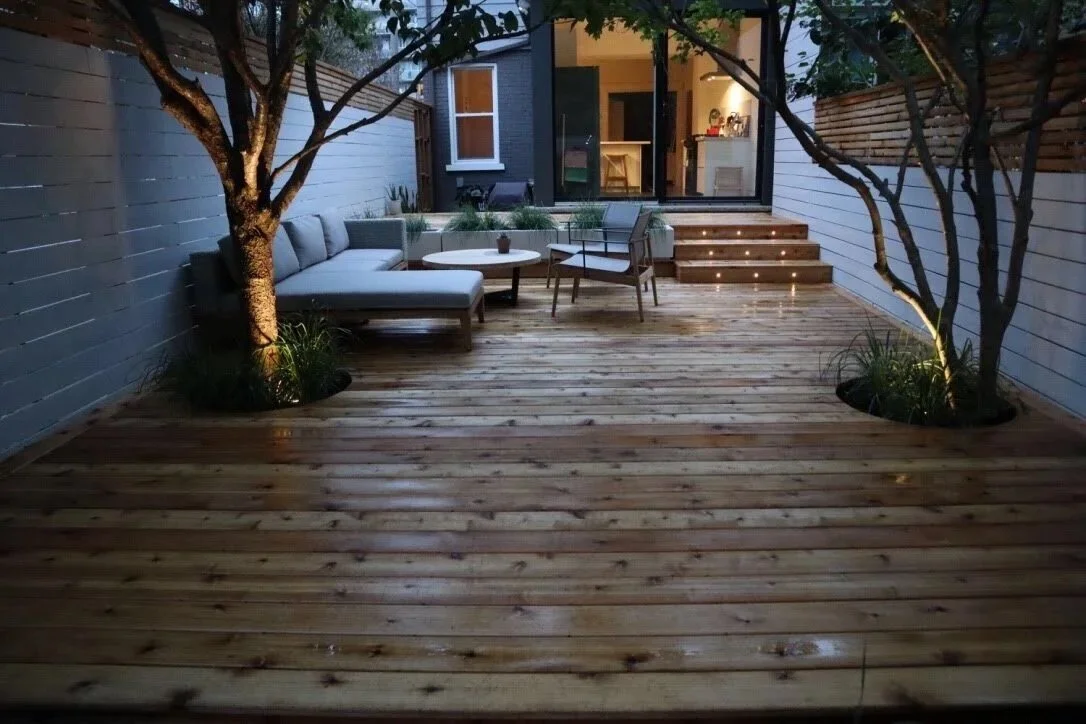
Wood is usually the more affordable option to install, which is part of why it's been the classic choice for so long. Pressure-treated wood sits at the budget-friendly end, with cedar and premium hardwoods costing more. Composite generally carries a higher upfront price for both materials and installation. If your decision is driven mainly by initial budget, wood tends to win, but as you'll see, upfront cost is only half the story.
Long-Term Cost and Maintenance
This is where the two really diverge. Wood needs regular upkeep to look its best and last: cleaning and staining or sealing every couple of years to protect it from moisture and sun. Composite is designed to be low-maintenance, needing little more than an occasional wash.
So while composite costs more upfront, it often closes the gap over the years by saving you on maintenance, which is worth weighing if you're planning to stay in your home a long time.
Durability Through Canadian Winters
In Toronto and the surrounding GTA, freeze-thaw cycles and heavy moisture are hard on any outdoor surface. Composite resists rot, warping, splintering, and insects, and it holds up well through wet and freezing conditions. Quality wood can last a long time too, but only with consistent maintenance, and neglected wood is far more vulnerable to our climate. Whichever you choose, proper prep and drainage underneath matter just as much as the material on top, which is often the real difference between a deck that lasts and one that doesn't. Either way, we can help with both the install and maintenance to keep whatever material you choose looking great season after season.
Look and Feel
For a lot of homeowners, this comes down to the heart. Nothing quite matches the natural grain, warmth, and character of real wood, and some people simply prefer the authenticity of it. Composite offers consistency and a wide range of colours and finishes, including options that convincingly mimic wood grain, without the knots and variation. If a natural, traditional look matters most, wood has the edge. If you want a clean, uniform finish that stays that way, composite delivers.
A Note on Heat and Comfort
One honest tradeoff: composite can get hotter than wood in direct summer sun, which is worth thinking about for a deck that gets full afternoon exposure or one you'll walk on barefoot. Lighter composite colours and shaded areas help, and it's the kind of detail worth planning around from the start.
What About for Swim Spas and Hot Tubs?
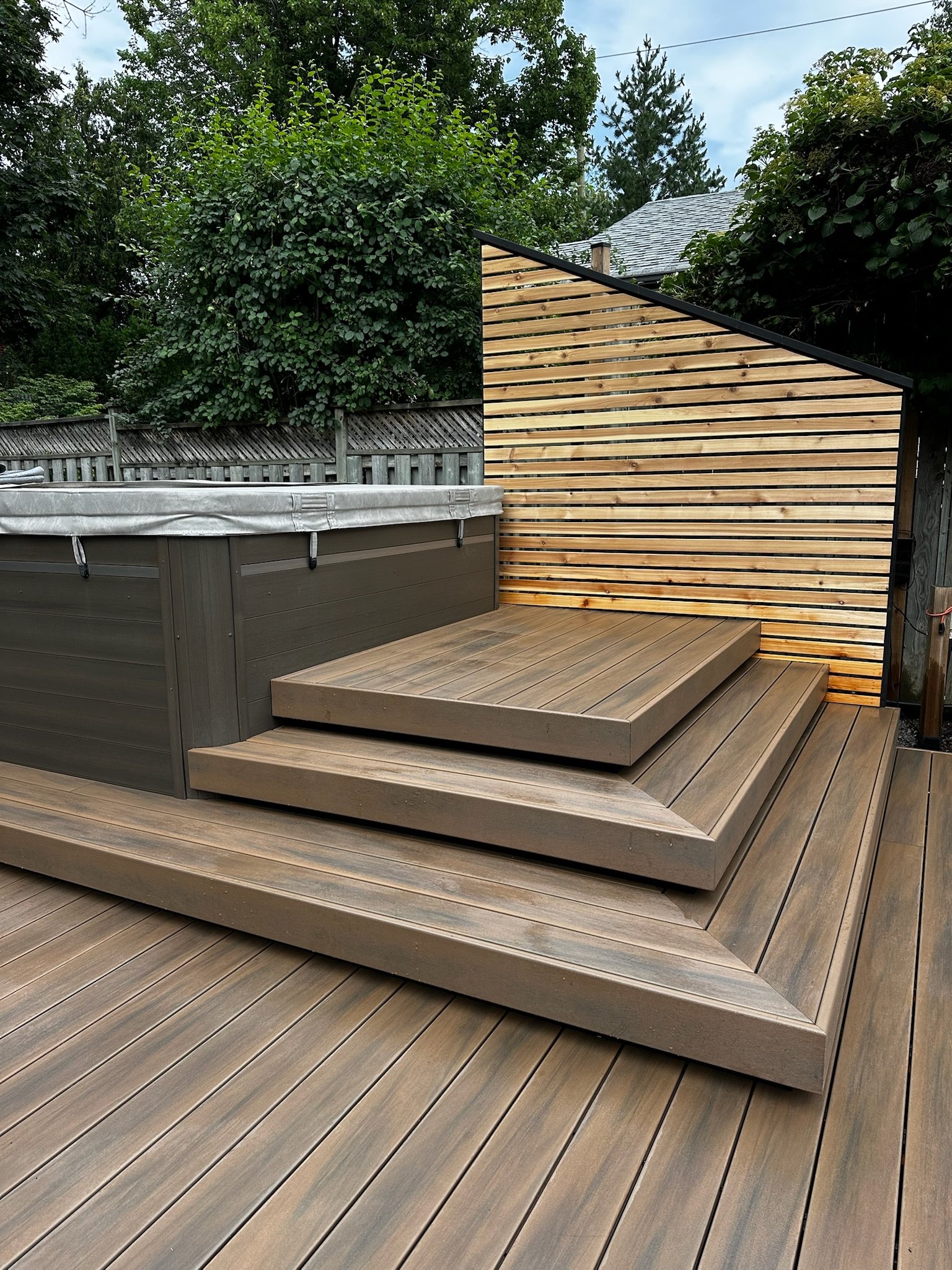
If your outdoor project includes a swim spa or hot tub, the decking decision takes on an extra dimension. These features involve constant moisture, splash-out, and frequent barefoot traffic, so low-maintenance, slip-conscious materials are worth serious consideration. Just as important, a filled swim spa is extremely heavy, so the structure beneath the deck has to be built to carry that load safely, regardless of which surface material you choose. It's a case where the material is only part of the conversation, and the build underneath is what really counts.
We have expertise in building custom decks that integrate your swim spa with lighting and privacy to help you maximize your outdoor living day and night, season after season.
So, Which Should You Choose?
There's no universal winner, only the right fit for your priorities. Wood makes sense if you love a natural look, want a lower upfront cost, and don't mind regular upkeep. Composite makes sense if you'd rather invest more now to save on maintenance later and want a surface that shrugs off our winters with minimal fuss. The best way to decide is to talk it through with someone who builds both and can weigh it against your yard, your budget, and how you want to use the space. That's exactly the kind of conversation we're always happy to have.